
I was tagged in this blog hop by an always excellent blogger and very good chum of mine, Tara of VegeTARAian. You can read her post over here.
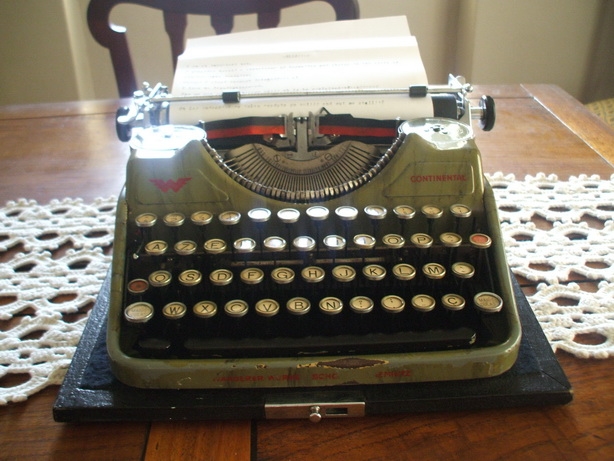
Why do I feel the need to sit down every week or so and tell perfect strangers about the latest place I went to sip on an excellent coffee? Why does any of it matter, if there are 70,000 food blogs and who knows how many food-based instagram accounts out there? What is my blog adding to ‘the conversation’?
These are questions I’ve been struggling with and procrastinating over for the last 6 months or so.
What am I working on?
The long answer: Right now, I’m ‘working on’ what I want my blog to be. Corridor Kitchen’s been running for almost four years and I’ve realised quite recently that the ‘template’ or ‘format’ I developed to keep the posts manageable and my motivation high has become needlessly restrictive; it’s actually started to de-motivate me.
I’d like to delve deeper into the topics I want to know more about. Enough of this surface-level soundbite bullshit. Unless, on a particular day, I feel like writing some surface-level soundbite bullshit! It’s my blog, I can write about what I like, isn’t that the point!? I’ve also become ridiculously hard on myself. If I’m not at the hot new coffee joint the second it opens to give people the 411, I often just let the post go altogether.
Chasing decent traffic and heeding far too much advice about staying ‘true to brand’ or ‘on topic’ can sometimes leave me frozen, unable to write a thing. Never mind that fact that anything I write on my blog will be, by definition, ‘true to brand’ because I wrote it. So I’ve resolved my blog, my rules. Fuck what everyone else is writing about if I’m not interested.
The short answer: Whatever the hell I like.
How does my writing differ from others in its genre?
It doesn’t, because there’s a very established format for food blogs. Most food blogs either fit neatly into or include some combination of the four archetypes below:
- The ‘reviewers’, those who write about the places in their area or a specific food type (e.g. they might write about specialty coffee worldwide, or they might write about New York restaurants). These blogs often have a hip, sometimes flippant tone and a finger-on-the-pulse bent and they are incredibly useful when you’re looking for a great restaurant or café somewhere.
- The recipe developers, who create or adapt recipes and sprinkle in a lovely little personal story into each post (I learnt this formula early on, it is what drew me to food blogging). The great thing about these blogs is they are very universal and relatable; their sense of place does not rely on you knowing a ‘scene’ or context’.
- The aggregators or ‘food mag’-style websites – those that aim to cover everything they can relating to food and may have many contributors. These can be amazing for the breadth of information they cover, their reach.
- The originals, who are truly doing something different, refuse to fit into or be part of any of these genres
Ok, ok, my writing does differ, because I have my own voice. But so does everyone else.
Why do I write what I do
I came to start the blog because fear of death.
I have always written; journals, in my free time, all through school from the time I could write until I graduated from uni. I do well in instances where people set me a task and give me a grade. The blog was in itself a writing ‘assignment’ I set myself (write a blog, you’ve got nothing else on kid), because I had an epiphany and realised I can set my own damn work.
I write a food blog because food is easy to write about, we all eat, we all have an opinion about what we stuff in our gobs.
I write about coffee because that I am obsessed with it and I think I know what a good one is, how to make it and where to find it. And I don’t see any reason why that information should not be shared, for free, unsponsored and as free of influence as can be, for anyone who wants it.
I reckon there are shitter writers than me out there writing about the same topics and I refuse to give the entire online space over to them.
How does my writing process work
Of late, it doesn’t work so well. But I’m starting to free myself up.
I take notes on my phone or a notebook when I have an idea or want to remember a phrase. I will sit down and force myself to bang out an entire post in a couple of hours. I will leave that for at least 24 hours and then check back and revise. I’m too lazy to do that a second time, so I’ll often leave the writing at that.
Sharing the love
Ok, now for the good bit. Four excellent bloggers below have agreed to be tagged in this hop by yours truly. I’d put more faith in their wisdom than mine if I were you.
Enviro-warrior, Tasmanian, Travel nut, stellar photographer (seriously) and good mate, Toni over at Shape of Things to Come seriously gives a fuck about sustainability and lives that principle. She’s in Peru right now putting her money where her mouth is.
Simon from The Heart of Food is one of the first Aussie bloggers I really started reading and got to know in person. He is a meticulous perfectionist, consummate photographer and all-round nice guy who’d surely give you his last panna cotta lamington if you asked. His posts are rare but precious things.
Ed has been blogging at Tomato since 2005 on food, writing, journalism, pr, ethics, you name it. His blog makes for a cracking read and that’s no surprise as he’s an ex-journo, social media consultant and self-described ‘punk rock food warrior’.
And Ai-ling over at Food Endeavors of the Blue Apocolypse is my blogging and IRL kindred spirit. She wears so many hats I’m surprised her head hasn’t come off her neck. She’s a food-obsessive, Perth-promoting, force-to-be-reckoned with.
What about you? Do you write? Why do you write?
To see more ‘Why I Write’ bloghop entries, check out all the links at A Welcome Relief.
I love the fact that I couldn’t explain to an outsider what exactly the building blocks of ‘your typical Aussie Christmas dinner’ are. It is, by and large, flexible. In fact, it may not even be a dinner, it may be lunch. It could be on boxing day rather than Christmas, and there may not even be a table at all; it could be on a beach, or in a park, or at a pub.

Every year in my family, we fling together something a little different from the year before. And every person I talk to has their different family traditions, dishes and recipes; some that stay the same year in year out, some that evolve, and some that they’d rather forget. I like to think that, as a group (cue massive generalisation), we Aussies are a laid-back, casual lot, and the variety of meals we share over the silly season reflects this flexible, adventurous way of looking at food, and recognises our diversity as a nation.
In a couple of weeks, I’ll be hosting a pre-Christmas recipe swap at the Glebe Library with the City of Sydney. We want people to bring in their Christmas recipes; the ones they love, the ones they hate, the ones they just made up yesterday. You can even bring samples to share, and we’ll eat and talk cooking and eating and Christmas. Huzzah!
If you can make it, here are the details
The Christmas Recipe Swap
Friday, 6 December 2013 from 1:00pm to 3:00pm
Glebe Library, 186 Glebe Point Rd, Glebe NSW 2037
What do I need to do?
- RSVP here
- If you have a recipe you’d like to share and need us to print, email it to lau@corridorkitchen.com by Thursday, 5 December 2013.
Hope to see you there, chums!
Someone finally said it. Maybe, we’re doing it wrong. But perhaps not in the way that we think…
Bloggers = mainstream media
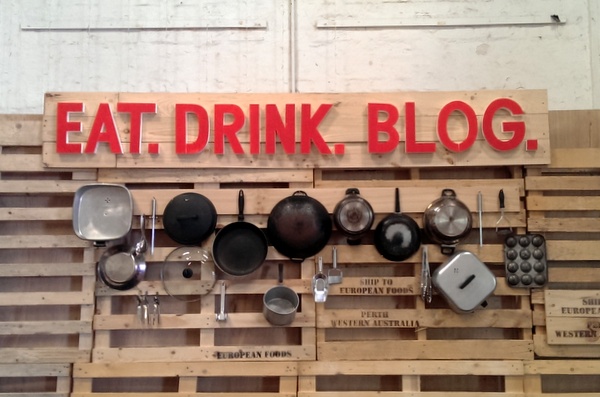
At this year’s Eat. Drink. Blog. conference in Perth, one of the highlights for me was Thang Ngo’s presentation on mobile and the future of blogging. In it, he warned us that if we’re not careful, bloggers could be dethroned by a more tech, mobile and analytics-savvy crew. He pointed out that our success, whether measured by google rankings, page views or the less tangible ‘relevance’, is in many ways a happy accident, whereby traditional media dropped the ball – they got online too slowly and we were already there. But complacency and failure to move with the times could leave us straggling behind.
Every day, it seems we are becoming more and more like traditional media, and they are becoming more and more like us. Could punchy, short, media-rich content save us? Certainly it would drive traffic and increase unique views. And then?
There’s more to blogging than numbers
As bloggers, what’s the aim of the game? Is it to be seen by as many eyes as possible? Of course if we write, we want to be read, so it makes sense to know how to ‘be seen’, but as I write this, the top story on News.com.au is ‘Box Office Bombs: the 15 worst movies in film history’, so clearly numbers are not all there is to blogging.
Saying ‘no’ to PRs
Then something significant happened. For the first time since I first attended Eat. Drink. Blog in 2011, somebody got up and talked about working with PR companies and said something other than ‘just do what feels right to you’ or ‘full disclosure’.
Phil Lees, the blogger behind ‘last appetite’ and Social Media Manager for Tourism Victoria, said that in his opinion, food bloggers shouldn’t write sponsored posts, because sponsorship influences the kinds of things they write about, and that will influence their readers.
This was hardly revolutionary, but all hell broke loose in our little corner of the twitterverse. As Phil himself tweeted:

You are an expert
Let me put it this way. PRs contact you because you are an SME; a subject matter expert. You are an ‘influencer’, with a strong brand. But how did you become an SME, how did you build that ‘brand’? Probably through hard work and dedication. Probably through your unique voice. Probably because you were good at finding something or saying something or doing something in a way that others weren’t. In a nutshell, you knew something they didn’t, and you were willing to share it.
So you’re approached by a PR company, and they basically want to co-opt your brand, grab some reflected glow from you SME status. They offer you whatever they offer you to get you to say something about what they are trying to sell. There is nothing wrong with this, but there is also nothing right with it.
Your blog is your space
As Erika wisely said in her recent post, your blog is your blog much like your home is you home. If someone wants to provide you with a product or experience that you wouldn’t otherwise be interested in and you wouldn’t recommend, your rejection of their offer should be a forgone conclusion. And if you do write sponsored content, one thing that you can never say is “I write what I want, I don’t let anyone else influence my content.” That’s impossible. That’s impossible anyway, none of us are un-influance-able. But it’s certainly impossible if you’re writing sponsored content.
WTF does that mean?
I’m not saying that if you do PR posts, you are an idiot or your readers are idiots; that you say you enjoyed x brand of cocoa and suddenly your readership is rushing out to buy it, and your blog becomes an value-less platform for product spruikers nationwide.
What I’m saying is, brands are paying to take up space in our ‘neighbourhood’, to be part of our conversation, a conversation they may have no right to be a part of. On a micro level, sure, you can do ‘what feels right to you’. On a macro level, a broader trend develops with outcomes we may not yet have anticipated. Brands may have presence and prominence and power that, frankly, they may not deserve.
Check out another presentation that blew my mind back in 2011, Journalist Simon Marnie on why authenticity and diversity of opinion is so important in blogging (apologies for the picture quality of the video).
embedded by Embedded Video
YouTube
I for one am rewriting my editorial policy this week.
Recently, I was lucky enough to be invited to a preview for snack food pop up Bao Town, which is being held at Vella Nero in the Sydney CBD. Bao town is the brain child of Theresa Nguyen, 10 year graphic design maven, food blogger and all round dynamo.
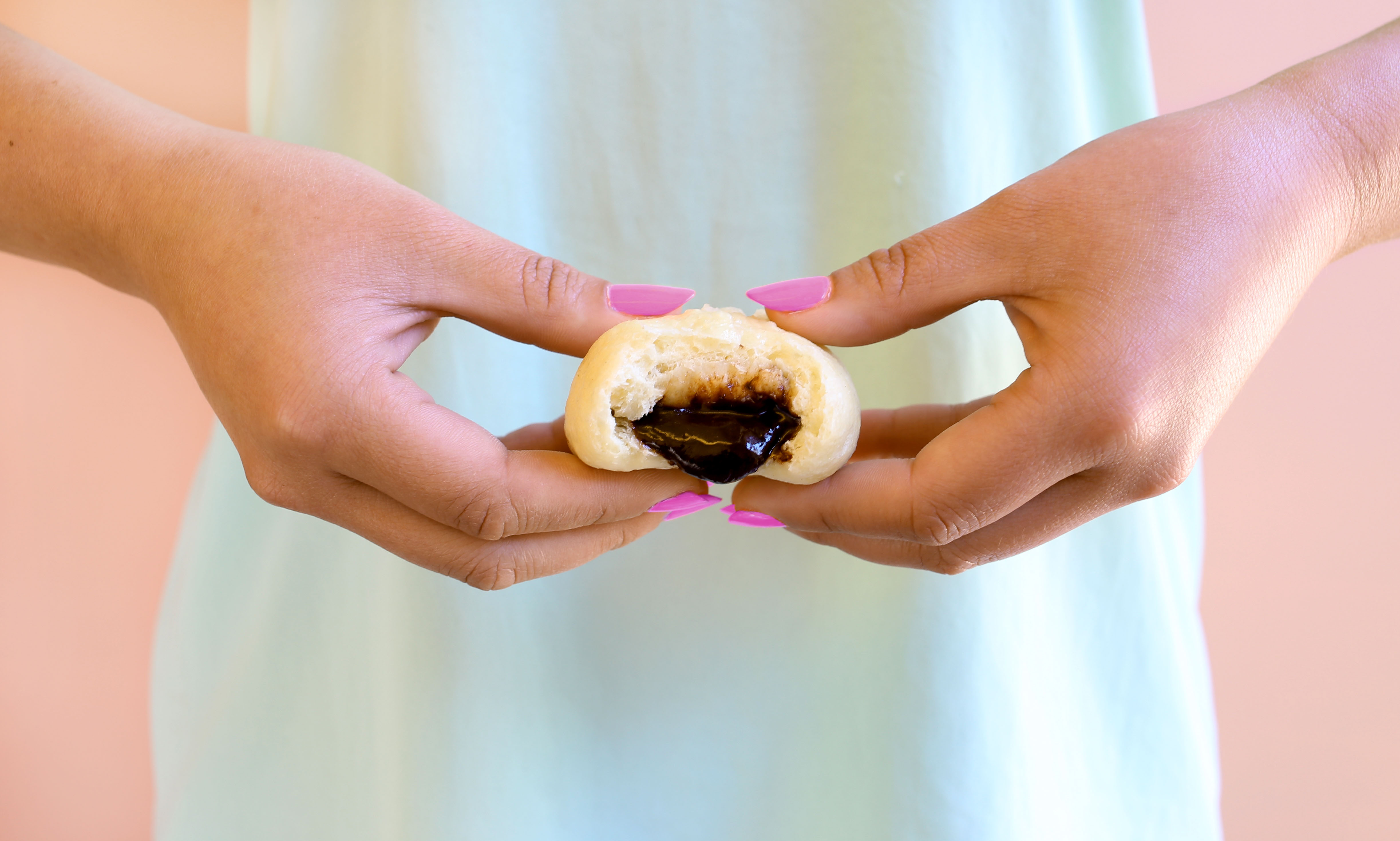
So WTF is a bao? You’ve probably had one of these filled, fluffy buns at some point in your life. They originated in china and are often filled with things like cha siu pork or red bean paste. At their best, they are fresh, fluffy and piping hot, filled with delectable insides. At their worst, they’re a sad and starchy mess with over-processed goopy guts. I haven’t scoffed down many baos in my day, so I was keen to learn more by doing so, and I’ll admit I was lured by the promise of coffee.
Bao Town’s baos are not the ultra-bleached buns you’ll find on your local cut-price yum cha cart. The dough is dense, soft and yeasty, fluffy but substantial, and the fillings are worth heading into town for.
There are 6 of these bad boys on offer. 4 savouries; Coconutty Pork Belly, Beef Bo Kho, Miso Eggplant and Yellow Chicken Curry, and 2 for pudding; Lemon Polenta and Molten Chocolate. Bao Town is doing what you’d expect – filling the bao’s with unexpected fillings. But don’t worry, Theresa learned the rules before she broke ‘em. The Beef Bo Kho is based on her family’s recipe, and the pork belly is slow cooked for 4 hours in young coconut juice.
Savoury-wise, my money is on the silky, salty and smooth Miso Eggplant, topped with a zesty coriander puree, and the Yellow Chicken Curry, a satisfying and complex vibrant yellow stew. But the show stopper has to be the Molten Chocolate by Marou, which sounds simple and obvious and it is, but the 100% liquid chocolate marries so perfectly with the bready bao in all its messy gorgeousness, I couldn’t stop at one.
The road from epiphany to action is one seldom tread, and often fraught with risk. It’s one thing to be hit by a lightning-bolt idea for a super-popular street food cart, shop or restaurant; it’s quite another to put in the capital, the hours and the work to take the massive risk that is setting up your own small business. Thus, a pop-up allows you to test the waters and take one step along the path from revelation to reality. Based on the preview, I’d say Theresa’s dream is very much worth the risk.
Bao Town will be popping up at Vella Nero on the following dates:
Saturday 12th October, 10:00am – 5:00pm
Saturday 2nd November, 10:00am – 5:00pm
Saturday 7th December, 10:00am – 5:00pm
Vella Nero
Shop 3, 259 Clarence Street,
Sydney NSW 2000
http://baotown.com/
http://www.vellanero.com.au/
A Fundraiser for The Sydney Story Factory, Saturday 15 June 2013
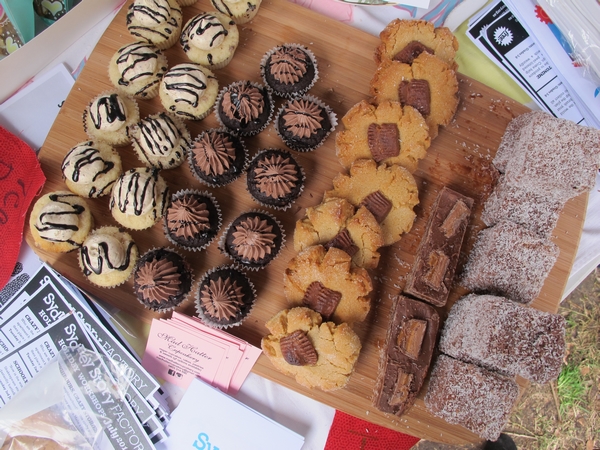
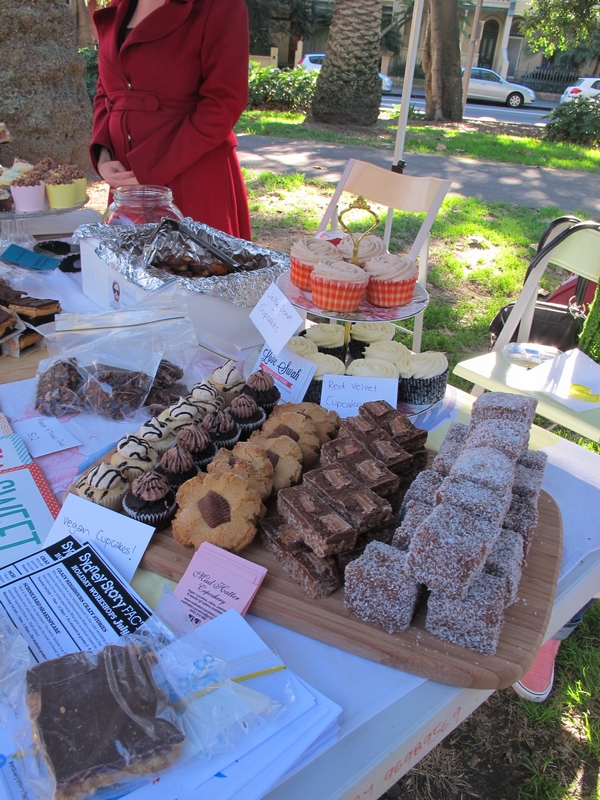
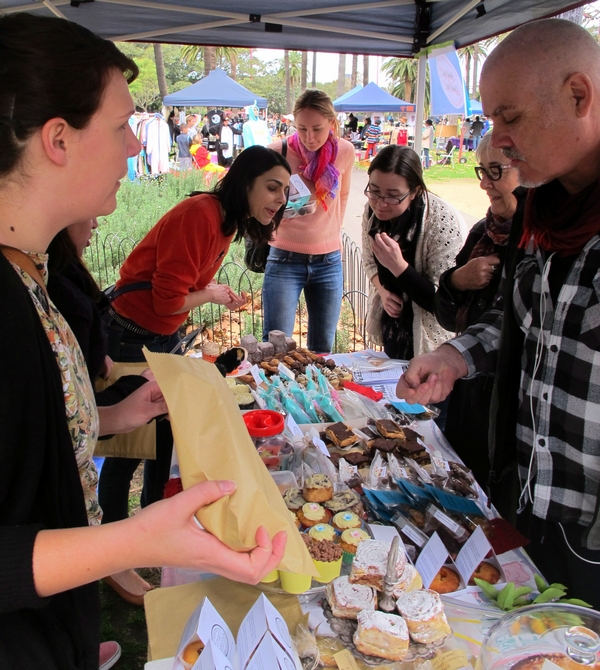
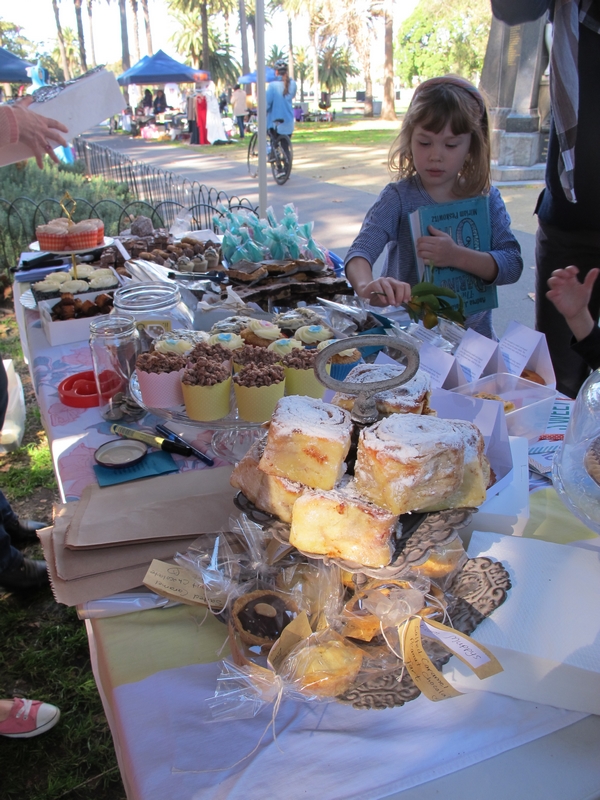
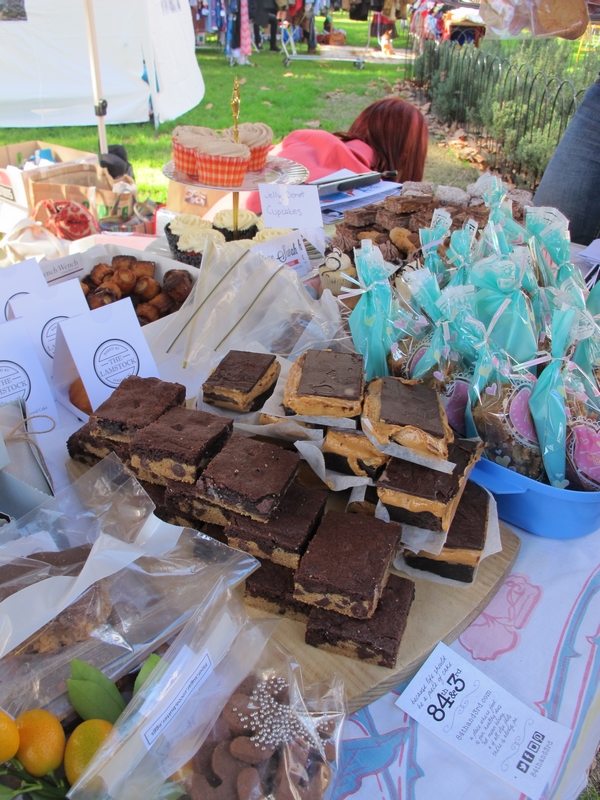
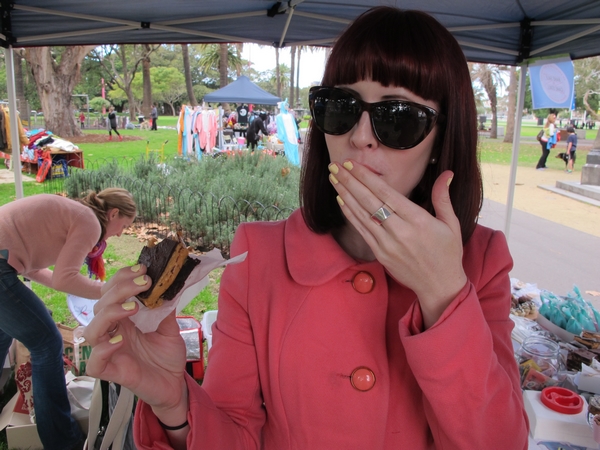
On Saturday June 15th, Katie and I (aka Pigeonhole Gatherings) held a fundraising baked-goods bonanza at the RedWater Markets in Redfern Park, Bake Sale vs Cake Stall, so titled as a nod to our two nationalities. Who won? I think the real winner on the day was neither Australia nor the U.S., rather, it was whoever runs the nearest peanut butter factory. They must’ve made a killing.
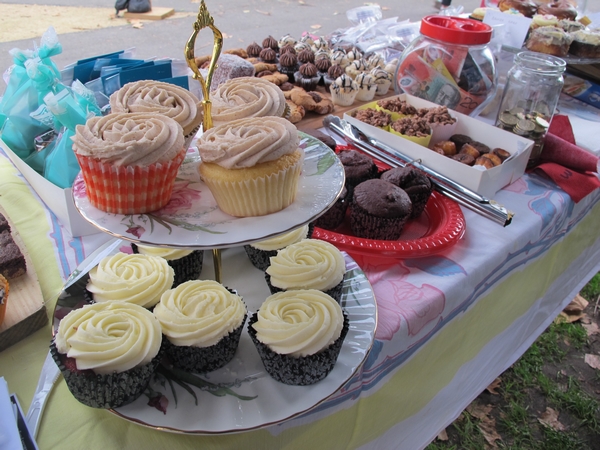
We could never have anticipated the amazing effort everyone would put in, and the quality of the incredible treats we had for sale. 22 bakers, over $800 raised and many very happy Sydneysiders enjoying a weekend sugar high- it was a rousing success. Thank you so, so much to all those who baked or gave their time or both. We could never have done it without you. Thanks to…
My Kitchen Stories I The Lamstock I Muppy’s I Love, Swah I Cats Love Cooking I Mad Hatter Cupcakery I Ms Critique I Scoff & Quaff I Raging Cravings I Box of Scrolls I Sugarlace I 84th and 3rd I Jeroxie is addictive and consuming I The Heart of Food I Belly Rumbles I The French Wench I Cooking Crusade I He Needs Food I Talk & Spoon
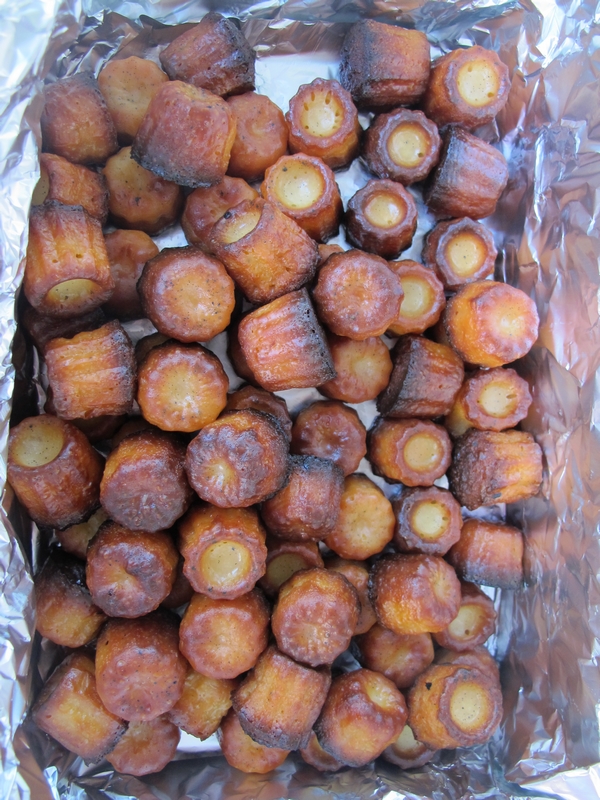
Better late than never, eh? Here are some pics from the day…
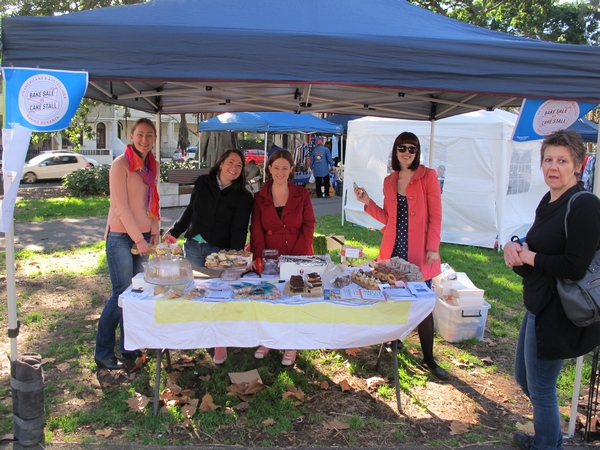
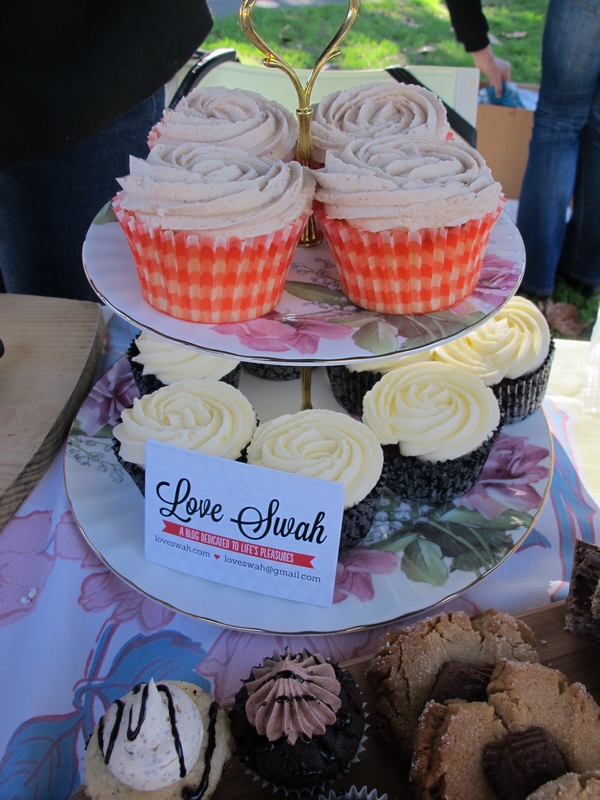
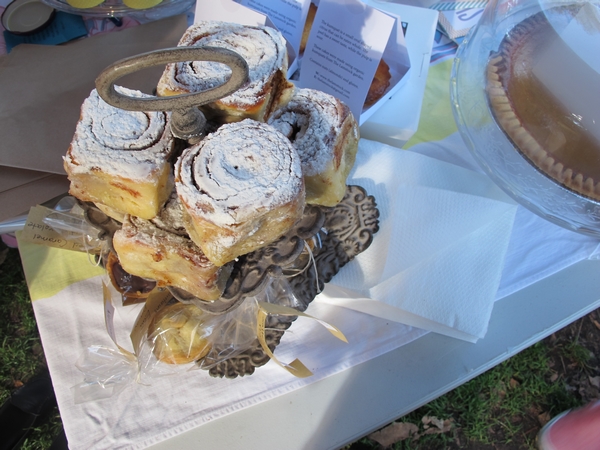
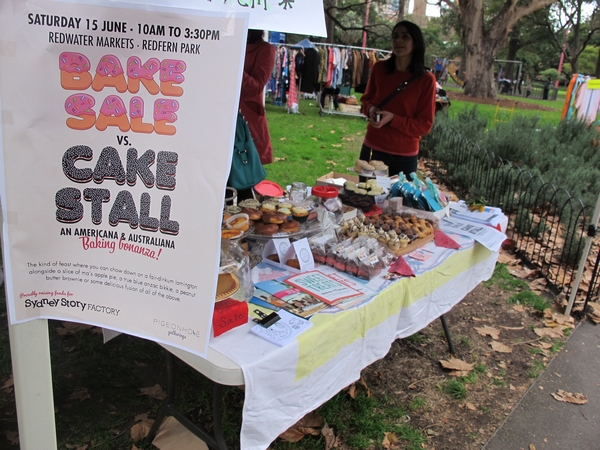
There was a time not long ago (pre-Corridor Kitchen) when I wondered if I had lost the ability to come up with ideas. Seems crazyhorse now, but not all that much was going on and it seemed like not all that much ever would be. It’s obvious to me now that ideas don’t come from nowhere; creativity isn’t bred in a vacuum. Ideas spawn ideas spawn ideas, until one day you look at your calendar and there is literally not a spare space left. And ideas often involve more than just you and your brain; they involve other people.
When I met up with Katie at The Rag Land what seems like aaaaages ago (but really it was only January), it was a lot like when Elise told me her idea for a cookbook and The Potluck Club was born. It was a meeting of the minds in the truest sense, both of us at a loose end, talking about what we could do, what we could make, together. Because that’s all creativity really is – doing and making things.
We talked about so many things over those few weeks, but we kept coming back to the idea of gathering together, and of people (not brands or buildings or money or even food) being the essence of a good party. And so Pigeonhole Gatherings was born, Swah designed us the perfect logo, and the rest is history.
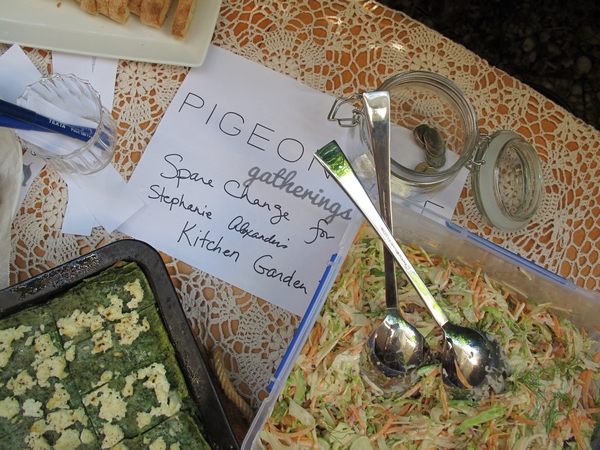
So what are we? Well, I’ll quote direct from Katie for this. ‘Pigeonhole Gatherings runs and promotes small, local, low-cost and free events centred around arts, culture, food and most of all, people. It’s already awesome and we are so excited!’ (Italics all mine). In a nutshell, we’re all about people coming together to do stuff. We fill the spaces that aren’t used 24/7. We could host a dinner in a local cafe. Or a wine tasting in the park. Or a life drawing class in an old warehouse. Or a how-to-sew workshop in a local high school. Or, our first gathering last week, a potluck at my house.
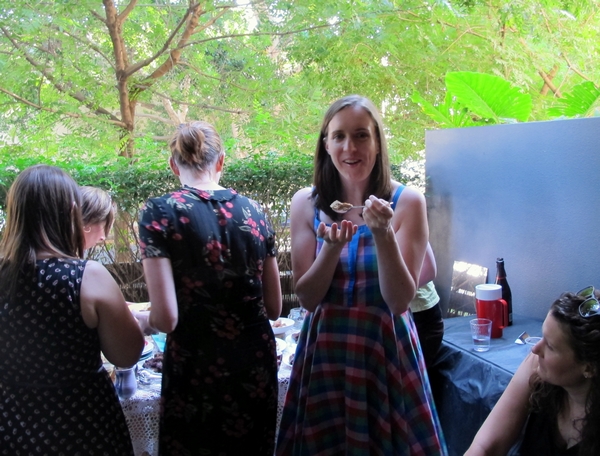
So last weekend, a bunch of people (orright, mostly food bloggers, but food bloggers are people too) met to share a meal in the kind of space we don’t see each other in all that often. It was an amazing day, and the food was more delicious than I ever could have hoped. We donated spare change to The Stephanie Alexander Kitchen Garden Foundation, and I think everyone had a grand time. But what struck me most, as we squished onto my sunny balcony and ate ourselves silly, was just how little was actually needed to make this happen, and how little inconvenience 10-or-so people gathering in my house caused. It was an absolute joy, and reminded me of why I started Corridor Kitchen in the first place – neccesity is the mother of invention. If I can cook a fabulous meal in my mouldy old corridor, the possibilities are pretty limitless. This is the next step.
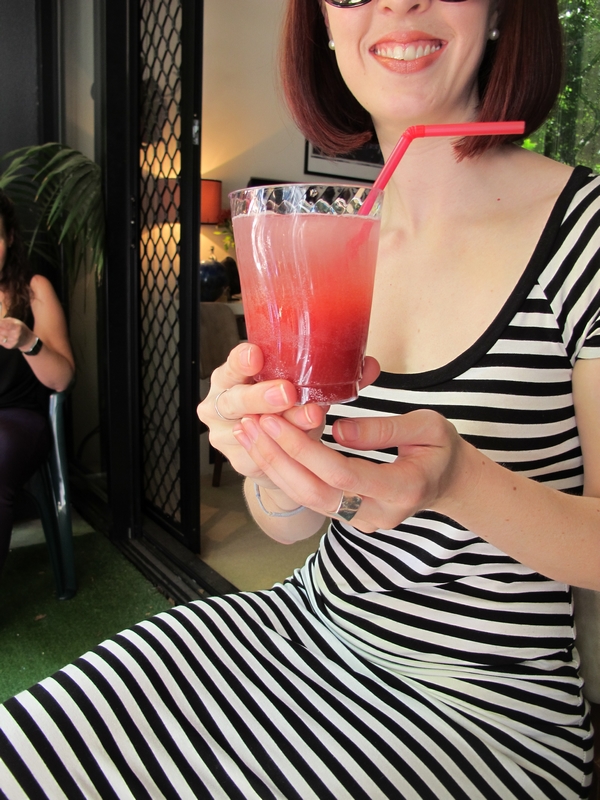
Huge thanks to everyone who came out and contributed, including food bloggers Swah, Tara, Megan, Flick, Hayley and JJ.
And our next event? Yes, it is food related; a charity cake stall/bake sale, date and venue to be decided.
And yes, Pigeonhole Gatherings is all about ideas. So join us on Google+ and Facebook and share yours. And share your gatherings!
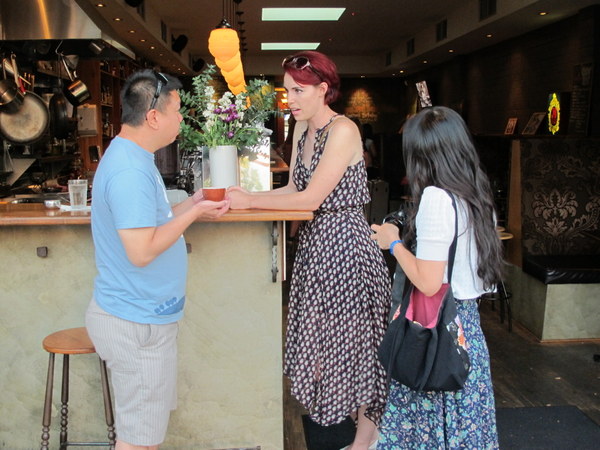
Writing a blog is by and large a solitary activity, and social media, paradoxically, can be anything but. But lately I’ve had the pleasure of becoming, dare I say it, part of a community. It’s a loosely-bound, organic kind of community, but a community nonetheless.
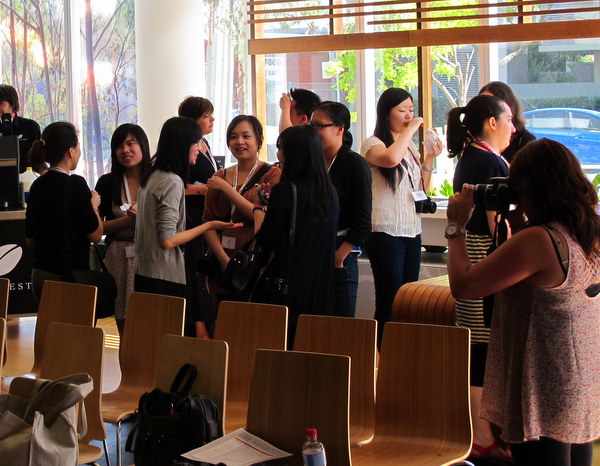
In a time when it’s commonly assumed we’re all living nutso, hectic, increasingly isolated lives, with the breakdown of family values, declining influence of religion, lack of moral fibre and increasing technologification (not a word) of daily life, I find this quite heartening. So I thought I’d take a break from writing about food and coffee today and turn instead to the food blogging community.
How to become part of something
Having an interest makes you interesting, at least to people who share that interest. This is why women’s mags will always tell you if you’re having trouble meeting people, join a club, take a class, or get a hobby. It sounds lame but that’s because they leave out two important ingredients:
1. The interest has to be genuine (verging on obsession helps), and
2. It takes time.
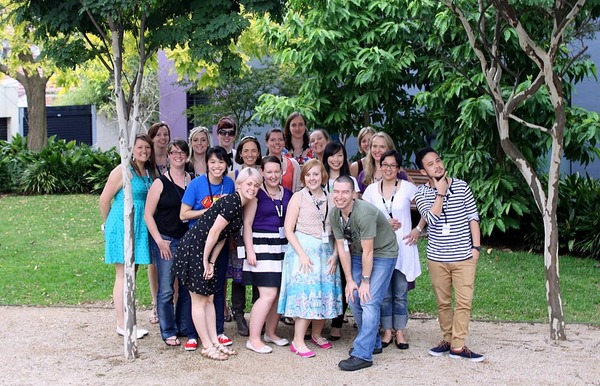
Photo courtesy of Food Scene Investigation
Genuine Interest
Most people can spot a faker from a mile off. I know I can, especially if what you’re faking is my bread and butter. It’s hard to have genuine interactions with people who are liars. But not only that. Say you want to become part of a community based on an interest in… nail polish. You want to really *love* nail polish. To death. Because everything you do in that community will be defined by nail polish. We see this all the time in cults. If you don’t want to drink the kool aid, you have to leave the cult. Your bible study group won’t have much to say to you if you stop reading the bible. I dread to think what I’d do with friends if I stopped drinking coffee. Senhor R and I have often turned to each other and said ‘What would you do with someone who didn’t love food? What would you talk to them about? How could you be in a relationship with them?” That’s it. Right there. That’s why I’m a food blogger and not a nail polish blogger.
Doing the time
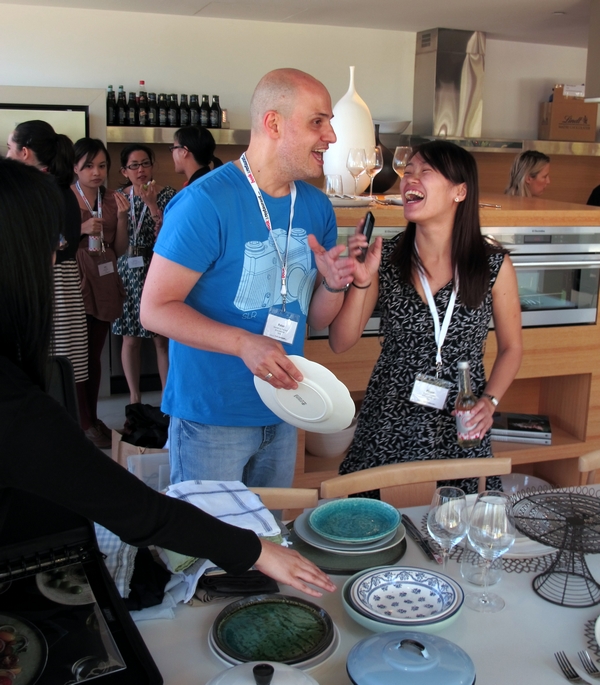
This goes hand in hand with the genuine interest thing, because if you aren’t obsessed with something, how the hell are you going to be part of a community based on it for years to come? But more importantly, it takes time to make yourself known. In the case of blogging, no one’s really going to read you that much at first. On social media, conversations, building up rapport, all that stuff – that can’t just suddenly happen. Even meeting people you’ve chatted to online can be weird and awkward, you may not get on. You may not ever meet. But when you’re present – online, at events, wherever, you’ll be seeing the same faces and names popping up over and over again, and yours will be too.
A Community doesn’t have to mean BFFs 4-eva
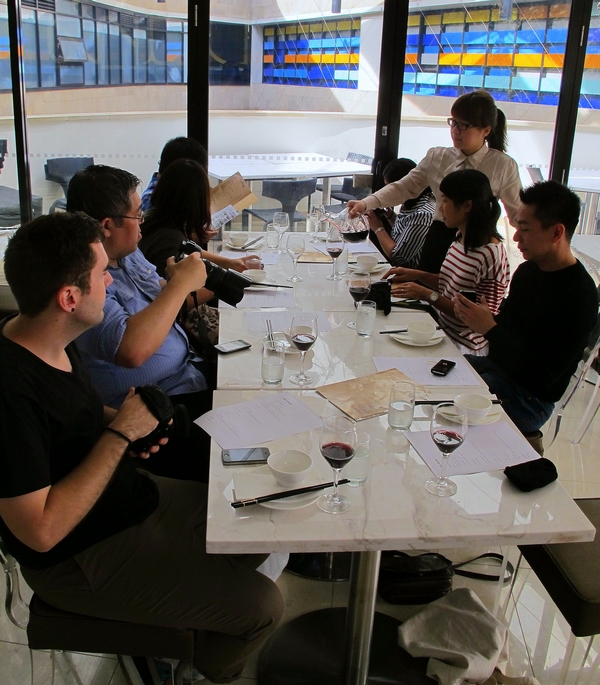
This is a really important point. I’m not saying you’re not going to meet your BFF food blogging or bible studying or nail polishing – you very well just might. But I am saying that it doesn’t matter if you don’t, and that being your aim is…lame. Because an interest-based community is by definition, based around an interest, it’s fine to meet your community just for dinner, or bible study, or nail polishing, or things related to or based around that. Anything else is just icing on the cake and not everyone’s a fan of icing (or so I’m told). The aim of the game is not to make friends by having an interest. Pursuing that interest is the aim in and of itself.
Why become part of something?
Study after study has shown that being part of the herd makes us want to kill ourselves a little less. It gives our lives meaning, we feel connected. Note I’m not encouraging you to join a clique, with rigid rules, a reluctance to let in new people and a tendency to shun those who don’t follow protocol. I’m talking about a group where people come together to do something, together, that they are interested in, and that gives them a feeling of purpose. But the main reason to become part of a community is IT’S FUN! And yes that warrants caps and an exclamation point.
Are you part of an interest-based community (or as I am now calling it, an IBC)? What’s been your experience?
I think it’s fair to say that there can sometimes be a touch of animosity between food bloggers and the food businesses we write about. This is understandable, as no one starts out in hospitality thinking they want to run a crap restaurant and equally, no one starts out writing about food thinking they are going to produce crap writing. Otherwise, why on earth would we all keep doing what we’re doing?
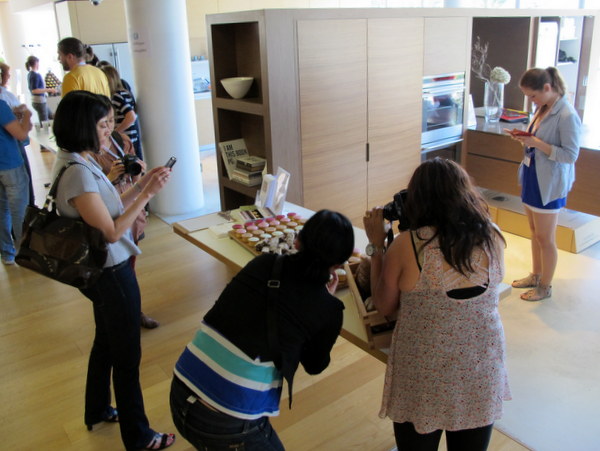
Writing about blogging about food
Lately the foodie/food blogger backlash has been growing. Food blogging is increasingly being written about as a no-holds-barred free-for-all where uneducated nobodies who haven’t done the hard yards and thus aren’t entitled to their opinion put in their two cents. Chefs weigh in, journos weigh in, characterising us as annoying, inexpert, opinionated, lacking in standards and constantly compromising our own credibility. True, we have also occasionally been written about in a positive light, such as articles like this and this where we have been characterised as ‘championing’ little known cuisines/suburbs or letting people in on food ‘secrets’, or in this article, where bloggers and the food industry actually (gasp) work together. But by and large it’s been an alarmist, ‘they’re taking our jobs and our free dinners’ panic-fest of slapdash writing.
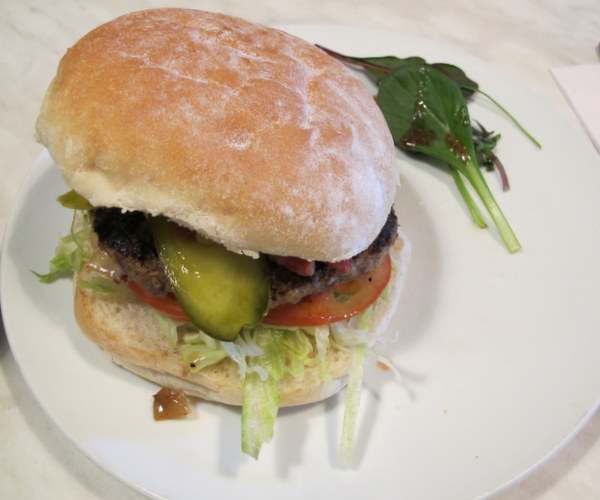
Anti-social media
I hesitate to give any more attention to an already lame subject, but this campaign for me highlights what’s wrong with this whole not-really-outright-war-but squabble-thing that flares up every now and then between those that make/serve/promote food and those that consume/review/write about it. It’s cheap. It’s tacky. It’s divisive. And for a brand that has made liberal use of food bloggers in the past and continues to maintain a strong social media presence, it’s downright confusing. Especially when, only 1 day after the campaign launched, they were inviting prominent food bloggers to try out their product.
What’s wrong with this particular campaign goes beyond hurting peoples’ feelings, beyond hypocrisy. Social media, chums. Look it up. It’s interactive, it’s about communication, it’s about networks. People will talk and you might not like what they have to say. Ok, so the only thing worse than being talked about is not being talked about, but if the people discussing you won’t buy your burgers, what’s the point?
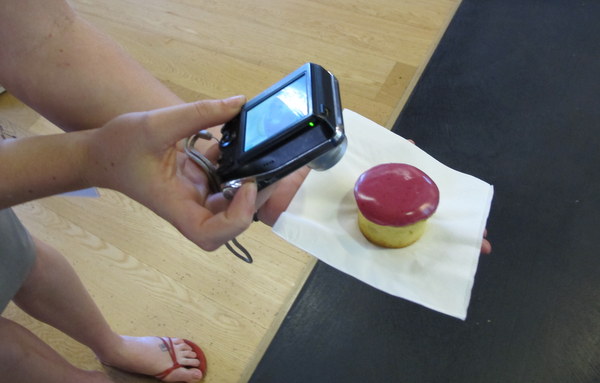
Foodies as wankers
A recent article, where an old school journalist tracks a cutting-edge foodie, Diane Chang, eating, drinking and spending for a week, got me thinking. She’s characterised as vapid, shallow and elitist; some of her quotes you would not believe, well beyond the realm of shit foodies say.
There is no doubt that food has become a hip young trendy urban ‘thing to do’. But does this invalidate it as a hobby, an interest, a persuit? Something tells me we shouldn’t disregard this zeitgeist, and here’s why.
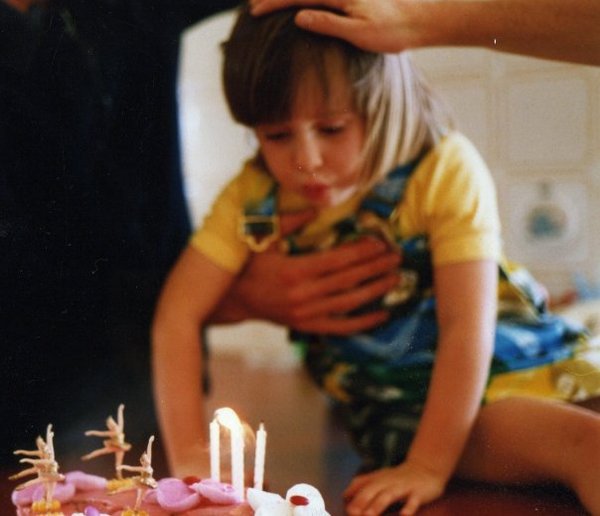
For the love of food
If you talk to food writers about why they blog, how they got started, their reasons have much in common. In fact, it’s almost a cliché. In the article, Diane touches on her childhood and on the experience of ‘discovering’ food, something we can all identify with. It’s kind of trivialised, but there is a genuine association and real relationship between food and memory that strikes a chord in all of us. We blog for the love of food. That may sound trite, but it’s true.
I remember mixing the cake batter, precariously balanced on a kitchen stool while my mum stood watch.
I remember the first time I learned to froth milk, my boss looking over my shoulder. The pressure!
I remember baking pavlova for my Texan housemate, and the look of pure joy that spread across her face at her very first bite.
I remember cooking my first ever roast chicken with my boyfriend, in our tiny coackroach riddled terrace.
In short, I remember food, and that is no small thing.
You can read Dianna Chang’s response to Michael Idov’s article here.
Whenever I get the chance, I make the pilgrimage to Melbourne, or, more correctly, to Western Melbourne. The shrine I seek has nothing to do with religion, but it has a spirituality all of its own. I seek something no Sydneysider can find on their back door step, something no amount of Harbour Bridges and sunny (ish) days and schooners and middies can make up for. I seek…injera.
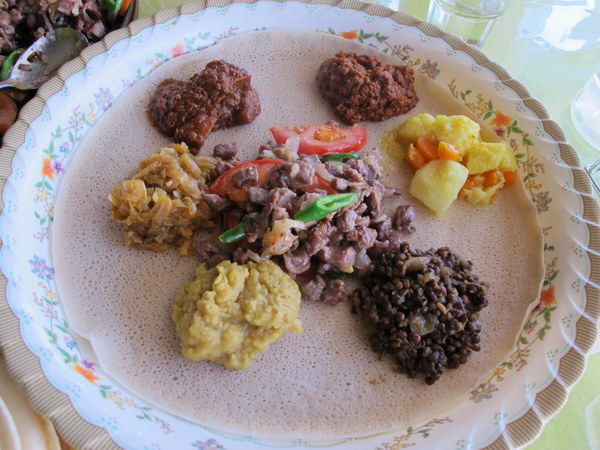
For those of you who haven’t had the exquisite pleasure, injera is a large crumpet-like flatbread that forms the foundation (literally, it sits under all the other food, tablecloth-like) of Ethiopian and Eritrean food. Stews (wats) are daubed on top of it and you tear of bits of the injera and scoop them up by hand. It is traditionally made using teff flour and thus has a delicious sour flavour.
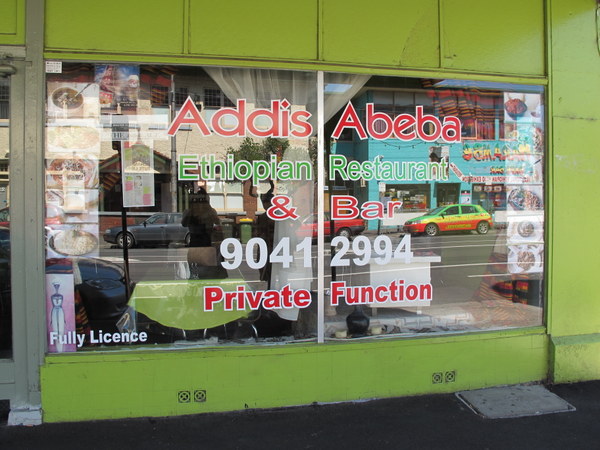
On my most recent pilgrimage, I caught up with Lauren of Footscray Food Blog, which I’ve been reading and eating from ever since my brother moved to the outer edges of Footscray. She offered to meet up at ‘lovely local place’, Adis Abeba. I could almost smell the fresh sponges of injera and feel them squish between my teeth. I couldn’t wait.
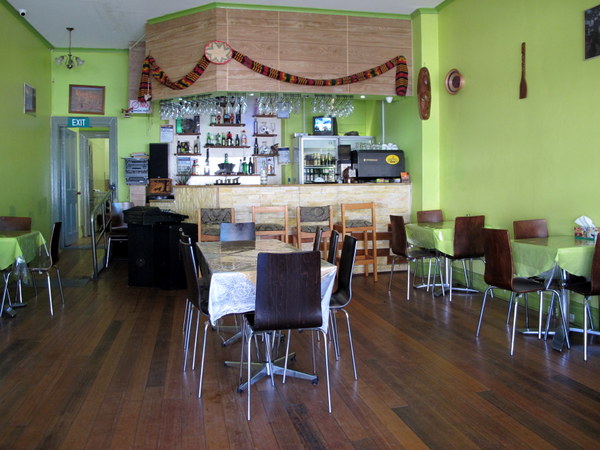
I arrived at the lime green Addis Abeba for our late lunch to find Lauren already there and no other customers. Lauren ordered (she’s the guru after all) and we proceeded to delve into talk about life, blogging and, of course food.
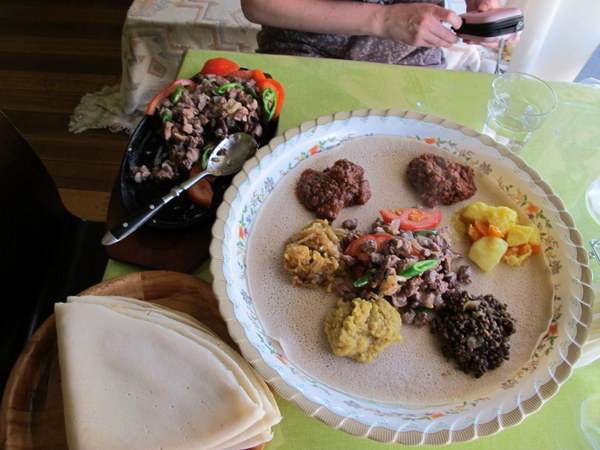
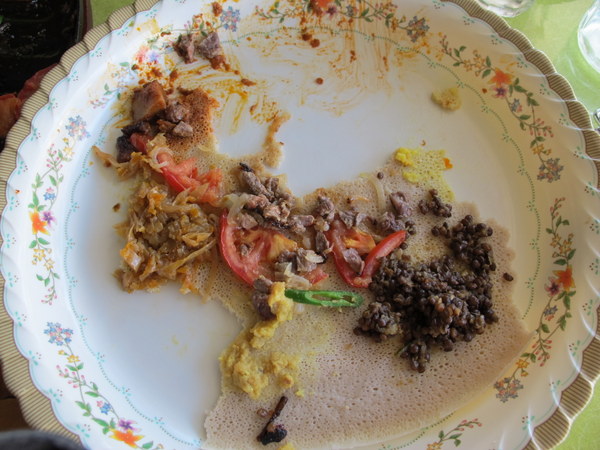
The veggie combo was amazing. For $12 there are 6 delicious curry-like stews to scoop up and munch. As we eat, the injera underneath get deliciously steeped in juices. But don’t worry, we have a whole massive bowl of injera in case it gets too soggy.
The other dish we order is the spacial tibs ($12), a gorgeous buttery lamb dish that comes out sizzling. We ladle it onto the platter as well, pinching up handfulls with the fresh injera.
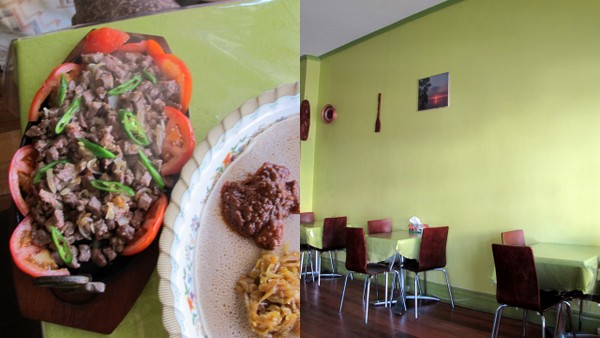
After my visit to Adis Abeba, I feel like I’ve graduated from Ethiopian food pilgrim to devotee. So much so that my brother and I return the next day and ordered the exact same dishes. And we also hit up Mesnoy Injera Bakery afterwards, so we could serve injera at bro’s house party.
A big thankyou to Lauren Wambach for hosting me in her ‘hood. See Lauren’s post for a better description of the dishes we ate.
What food would you travel halfway around the world, or at least across town, to savour?
Addis Abeba
220 Nicholson Street
Footscray, VIC, 3011
(03) 9687 4363
addisabeba.com.au


Ok, so first off I am super, super excited about my new blog header! Yay! My amazing friend Amy, of Fenetik Designs designed it for me on the condition that I pay her in wine. And no, that is not an invitation for you to do that same should you ever need a talented graphic designer. But it is a testament to how awesome she is.
I was so sick of my dodgy-looking diy job and now I finally know what it means when they say you should invest in professional work. Amy, thank you so so much for making Corridor Kitchen look like an actual blog, rather than something cobbled together in a wordpress-meets-ms-paint-meets-microsoft-word-kind-of-way (not that there’s anything wrong with that).
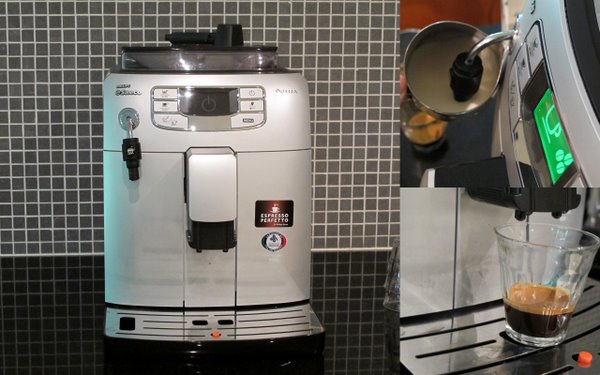
So on to the competition! Y’all must remember the lengthy/boring video review I did of the Philips Saeco Intelia a while back (sorry, when I think of Amy, I come over all Southern). *Ahem*. Well, the time has come for one of my (Sydney) readers to reap the benefit of my good fortune. I’ve recently cut back on my coffee, as I’ve been having what feel like b12 deficiency headaches – funny story, if it weren’t for them, Corridor Kitchen would not exist. So I feel I only need one espresso machine rather than two (I already owned one when this baby rocked up).
I’m giving one of you the chance to win the Philips Saeco Intelia, a fully automatic espresso machine that critics (ie myself and my boyfriend) are calling ‘pretty much ok.’ This machine retails for $999 and it’s no slouch. Quiet, efficient and mess and hassle free, it makes pretty good coffee if you use freshly roasted beans. To that end, I’m including a bag of freshly-roasted Campos Dark City blend to go with. Your welcome.
To enter, comment and tell me how you stave off cravings when you’re trynna cut back or give up something.
You’ll also need to like corridor kitchen on facebook and follow me on twitter to be eligible to enter. Competition closes Friday March 9 2012 and the winner will be announced via facebook/twitter on Monday March 12. This competition is open to those who can get something delivered to Sydney, NSW, Australia only, as that is where the PR company that sent me the machine will courier it.
About me
 Sharing easy recipes, hunting down the best coffee. Honest accounts, nothing too serious. Read more...
As featured in…

Connect


